
10 Tips for Virtual Event Marketing
Table of Contents
What are the best techniques and recommendations for virtual event marketing? From establishing a website to promoting your event on social media, there’s a wide variety of methods you can apply to your events to increase awareness. Be it email campaigns, sponsorships, referral programs, or other virtual event marketing trends, in today’s post, we’ll take a look at some of the most useful strategies that are designed to optimize your marketing efforts and maximize the results of your one-day and multiday events.
Top 10 Tips for Virtual Event Marketing
Virtual marketing event ideas and techniques play a vital role in attracting the right audience and improving engagement before, during, and after the event. By effectively using digital channels (such as email and social media), applying content marketing tactics, and using paid advertising, you can easily maximize event attendance and track key metrics. Let’s explore the 10 most valuable and functional virtual event marketing strategy techniques to boost your marketing plan for virtual event.
1. Create a Dedicated Event Website
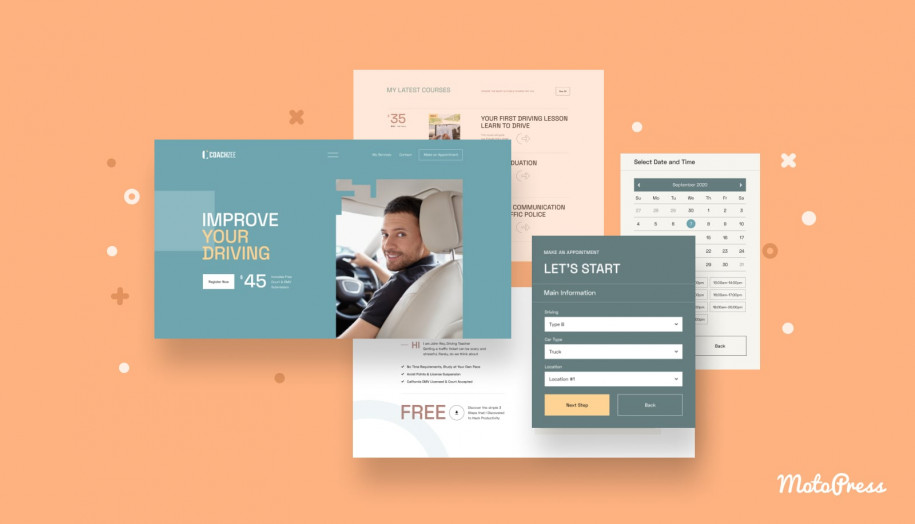
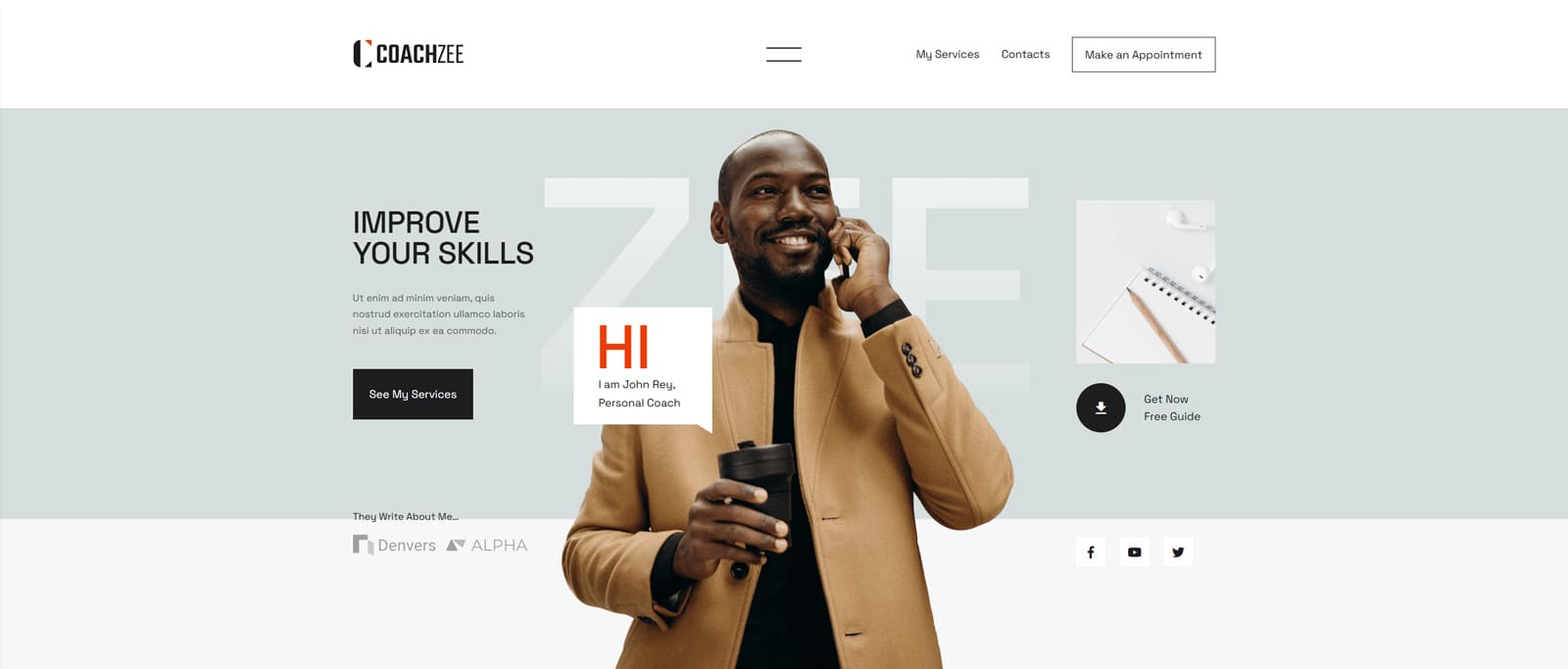 One of the first virtual event marketing techniques we’d like to recommend is to establish a powerful online presence with an event landing page or website. With eye-catching visuals and a compelling copy, your event page can become a centralized hub for event bookings, related information, and essential details. WordPress is best for event sites and one of the surefire ways to get such a website is to use WordPress themes, such as CoachZee, that provide a clean and responsive layout, a variety of content blocks you can easily customize, and varied functionality for your event website. With a proper design approach, such an online presence should include:
- Clear event description;
- Registration and ticketing system;
- Event attendees’ testimonials;
- Speaker profiles;
- SEO-ready event pages.

2. Work on Your Event’s Brand Presence
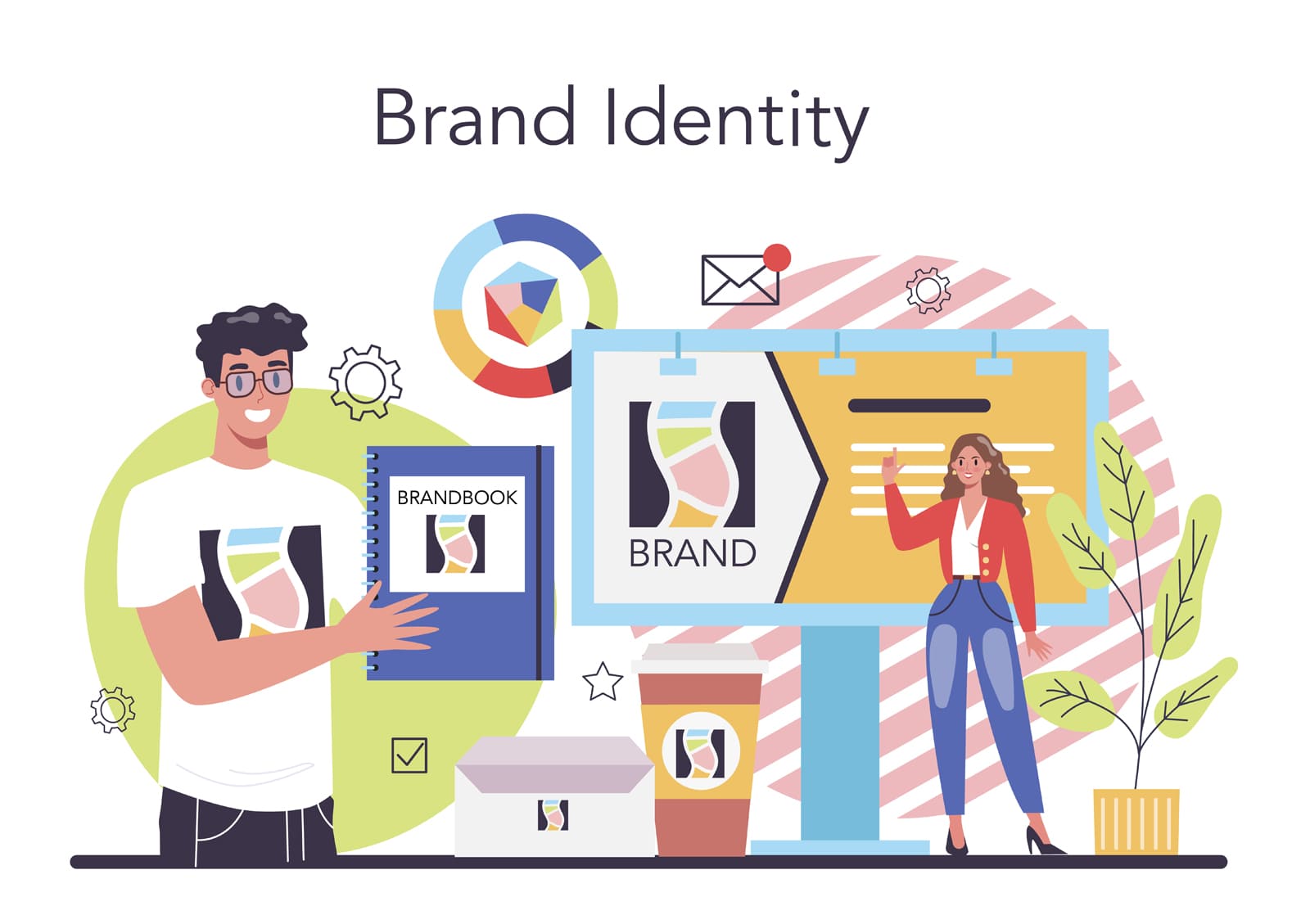 If you’re establishing your virtual event with consistency at its core, it is highly recommended to take care of your brand’s presence. It should clearly communicate the purpose of your virtual event as well as provide a professional experience across multiple marketing channels. By using consistent logos, typography, and colors throughout your socials, website, and emails, you can easily increase your brand recognition alongside following other virtual marketing event ideas. This also helps to build trust with your potential attendees and delivers additional benefits for your event:
- Higher audience trust;
- Improved marketing performance;
- Stronger long-term brand awareness;
- Great engagement.
As a result, with proper brand presence, your online event becomes trustworthy and memorable to potential attendees. This also ensures a higher chance of one-time visitors becoming regulars.
3. Make Your Event Calendar Public
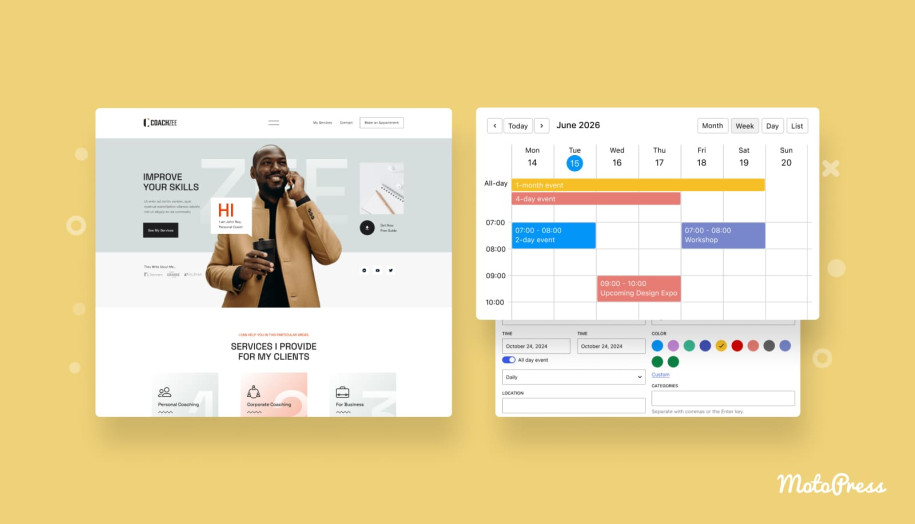
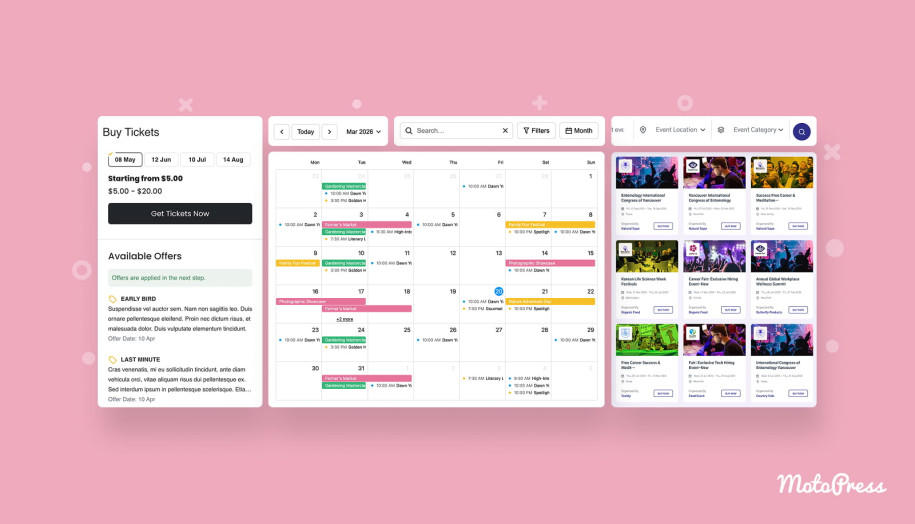
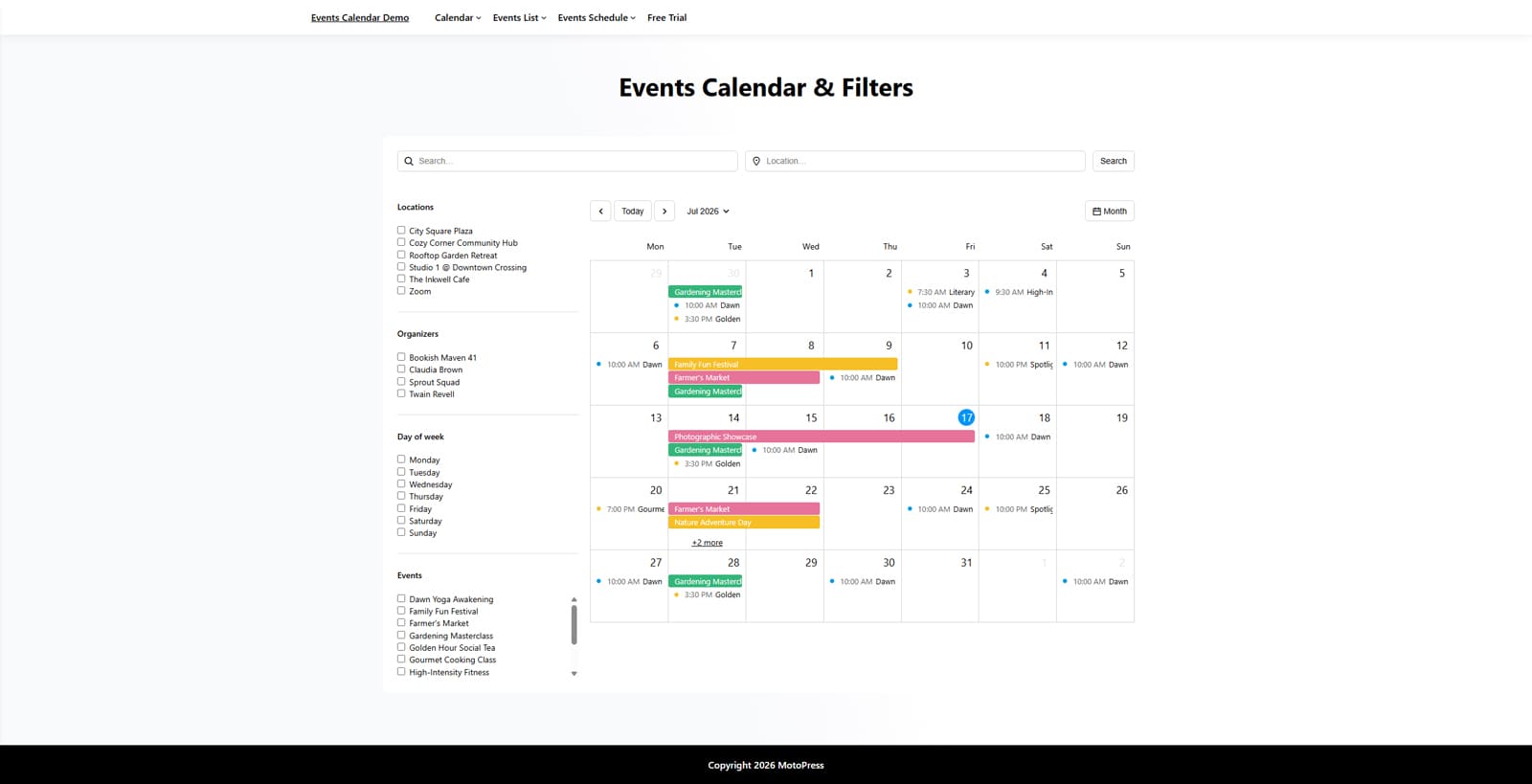 Adding a public calendar for your event website is guaranteed to attract attention and keep your potential attendees informed and engaged. For example, you can display data about upcoming workshops and important dates in a user-friendly calendar format using the MotoPress Events Calendar plugin for WordPress sites. With its support of recurring events and informative schedules, you can provide all necessary details without developing anything from scratch. Additionally, using such a tool for virtual event marketing will 100% help you showcase the true value of the event, while also being a great solution for creating an accessible online presence.
Solutions similar to the Events Calendar plugin by MotoPress also help with other aspects of a virtual event marketing strategy:
- Keeping your visitors informed;
- Reducing administrative work;
- Increasing event visibility;
- Improving the user experience.
This is not only useful for your attendees but also makes it simple for you to publish any updates and drive new registrations for your event, saving you time and money instead of going for other costly alternatives.

4. Use Email Marketing Tools
 Remaining one of the most effective virtual event marketing ideas (working quite well for other niches, such as the hotel industry), email marketing allows you to communicate directly with potential event visitors. By leveraging tools like Mailchimp and using email campaigns to announce the upcoming virtual event, you can easily highlight its key speakers and sessions. Additionally, such a marketing approach allows sharing exclusive updates with your newsletter subscribers and delivering personalized messages that can include:
- Announcement of key speakers;
- Early bird offers for registration with members-only discount codes;
- Event countdown emails to eliminate no-shows;
- Post-event emails with exclusive recordings and surveys.
5. Partner with Influencers
 By partnering with influencers and experts, you can easily expand your event’s reach. Thanks to the established audiences of influencers, event speakers, partners, and even teachers or instructors, sharing announcements, updates, and exclusive content becomes one of the key stages of virtual event marketing. This serves as a great way to spread the message about the upcoming event. Moreover, thanks to the social and professional connections of influencers, it is possible to increase the number of registrations and increase awareness before the event begins using the numerous benefits of such collaboration, including:
- Increasing your event’s credibility;
- Expanding your audience reach by promoting it via trusted communities;
- Boosting social media engagement;
- Improving brand awareness of your virtual event.
6. Keep Your Visitors Engaged with Gamification
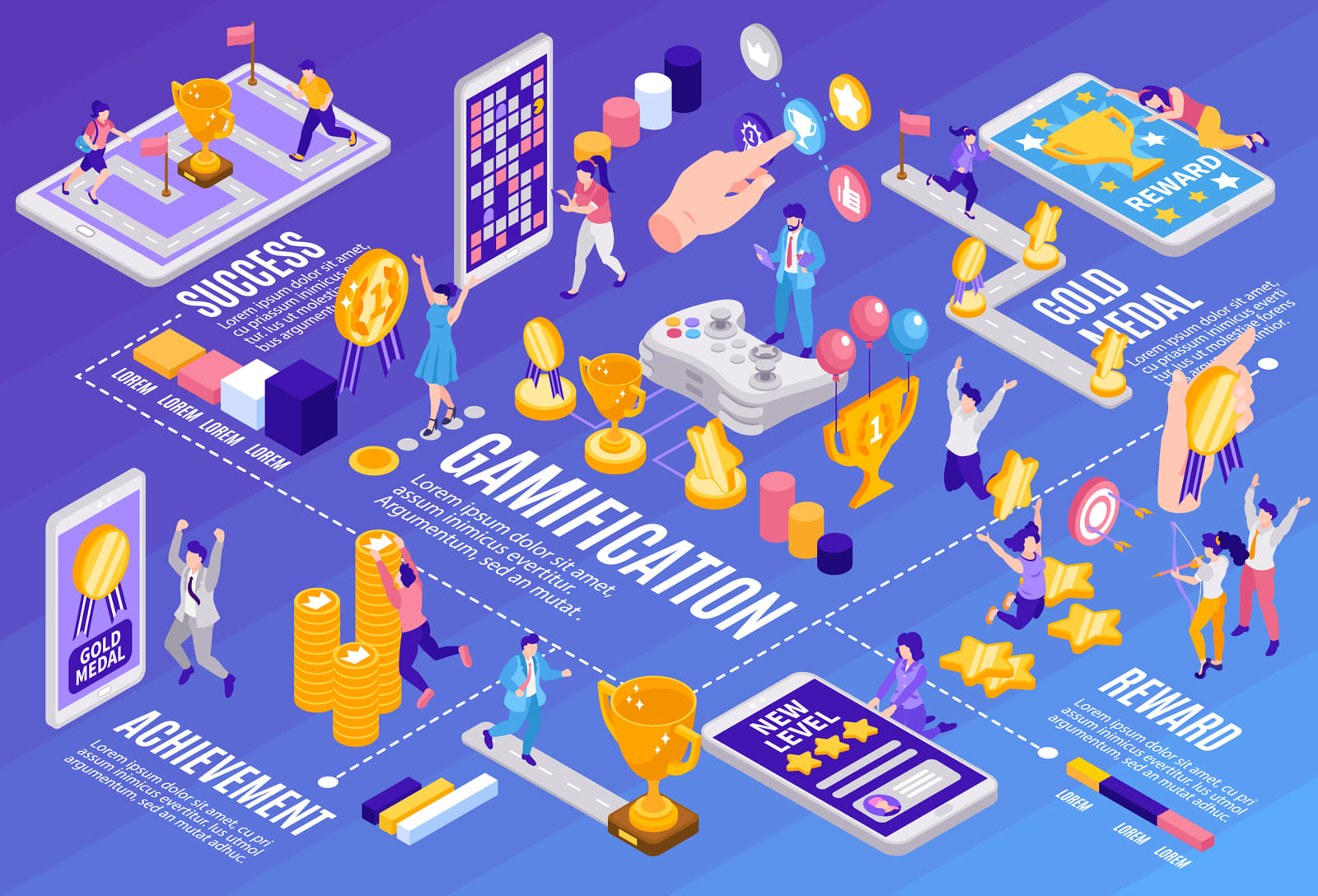 Keeping your potential attendees engaged is probably one of the main challenges event organizers face, from leading businesses to nonprofit organizations. If we are talking about a marketing plan for virtual event, this stage is crucial to delivering a smooth experience. One of the best ways to increase engagement is to use gamification elements. From leaderboards to contests and live polls, you can motivate participation at your event. With rewards, exclusive content, and prizes to event attendees, your virtual event marketing platform is sure to increase retention and create a memorable experience for everyone in more ways than one. For example, applying gamification to your event ensures:
- Useful networking opportunities for your event planning business;
- Higher participant retention rates;
- Guaranteed session participation via rewarding interested users;
- Enhanced overall event experience for attendees.
Additionally, using this approach also provides useful insights into the behavior of your event visitors. Thanks to the challenges they complete and user interactions, you can identify the most popular activities. This gives a better understanding of ways to improve future events and how to market them.
7. Publish Relevant Blog Posts
 The next virtual event marketing recommendation concerns creating relevant content in your blog. Be it publications regarding your event’s main topics or highlights, including the invited speakers or event rental intricacies, any kind of blog content that might interest your target audience can be useful for marketing your virtual event. Additionally, such an approach can be used in promoting upcoming event sessions and sharing important updates, while also being great for engagement of your future visitors. Using blogging as a part of your marketing plan for virtual event gives you extra benefits, such as:
- Consistent website traffic;
- Improved search engine optimization and online visibility;
- Higher credibility for your event agency online;
- Support for other marketing channels with relevant content.
8. Post on Social Media
 Posts and announcements on social media can also be used to promote your virtual event. With a consistent posting schedule, delivering short-form videos, interactive content with event hashtags, and hosting streams on your Facebook or Instagram page (as well as via Google Meet or Zoom), you can drive traffic to your event and attract more potential visitors. Additionally, social networks are great for directly communicating with people who are interested in your event, as you can answer their questions right away and provide any information they need.
By posting on social media, you also get access to various benefits that this one of virtual event marketing trends provides:
- Building stronger relationships with your audience;
- Quick event reach expansion;
- Higher engagement through comments, likes, and shares;
- Increased registration rates through direct communication.
9. Video Content
 Video content often has a noticeable positive impact on first-time visitors of event websites and is a part of any marketing plan for virtual event for a reason. Using trailers, teasers, and interviews with event speakers, you give attendees a better understanding of what your event is about. With videos in your blog posts and social media publications, you also showcase the strong suits of your upcoming virtual event, giving you more possibilities to drive engagement, registrations, and online activity from your attendees. Moreover, by posting videos on your event’s YouTube channel or social media accounts, you get to:
- Capture the attention of potential attendees;
- Encourage content sharing and discussion;
- Communicate directly with your viewers and subscribers;
- Increase the confidence of your audience by posting event previews.
10. Track Performance Analytics
 One of the extra tips to follow when working on your marketing campaign for virtual events is connected with performance analytics. Monitoring it allows you to get access to a better understanding of advertising performance, website traffic, and other key factors, such as attendee participation. Tools like Google Analytics or all-in-one virtual event marketing platform options for event management, such as Bizzabo and Chati, can really help in tracking the performance of your event and help you modify your marketing strategy where necessary. Such platforms can also help with:
- Data-driven decision making;
- Identifying high-performing marketing channels;
- Measuring the effectiveness of your marketing campaign;
- Revealing audience behaviour through detailed insights.
Conclusion
 We hope this overview of popular virtual event marketing techniques helped you choose the right way to enhance your online marketing strategy. When combining efficient planning, audience targeting, and relevant content, you can easily boost event registration and attendance. With virtual event marketing ideas evolving, you’ll need to adapt to new challenges, such as AI marketing tools usage in adjacent industries. It is also necessary to use marketing channels’ potential to achieve the best results. Additionally, virtual events play a crucial role for any modern business, especially when it comes to their benefits:
- Global reach: Using modern platforms and solutions, virtual event agencies and organizers can connect with attendees from anywhere in the world without experiencing geographical limitations.
- Cost efficiency: By reducing spending associated with venue rentals, event equipment, logistics, and related expenses, virtual events can help you save money while delivering the same experience for your attendees.
- Improved accessibility: Online events are great if you want to allow participants to join from any location. Thanks to mobile devices being widespread, virtual events became one of the most accessible online activities, offering an unforgettable experience to attendees regardless of their location.
- Greater flexibility: Thanks to online events being able to cater to growing audiences, users and website visitors can gain on-demand access to event content without having to attend venues or participate in live event sessions. This approach to organizing events makes virtual workshops and activities one of the best ways to learn something new and spend some quality time.